
[Press Release] Three years after its launch, TRANSITIONS unveils tangible results from its first cycle
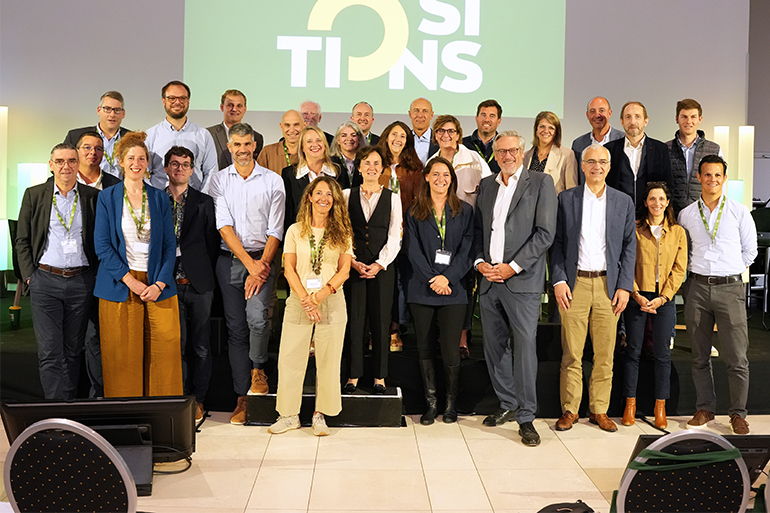
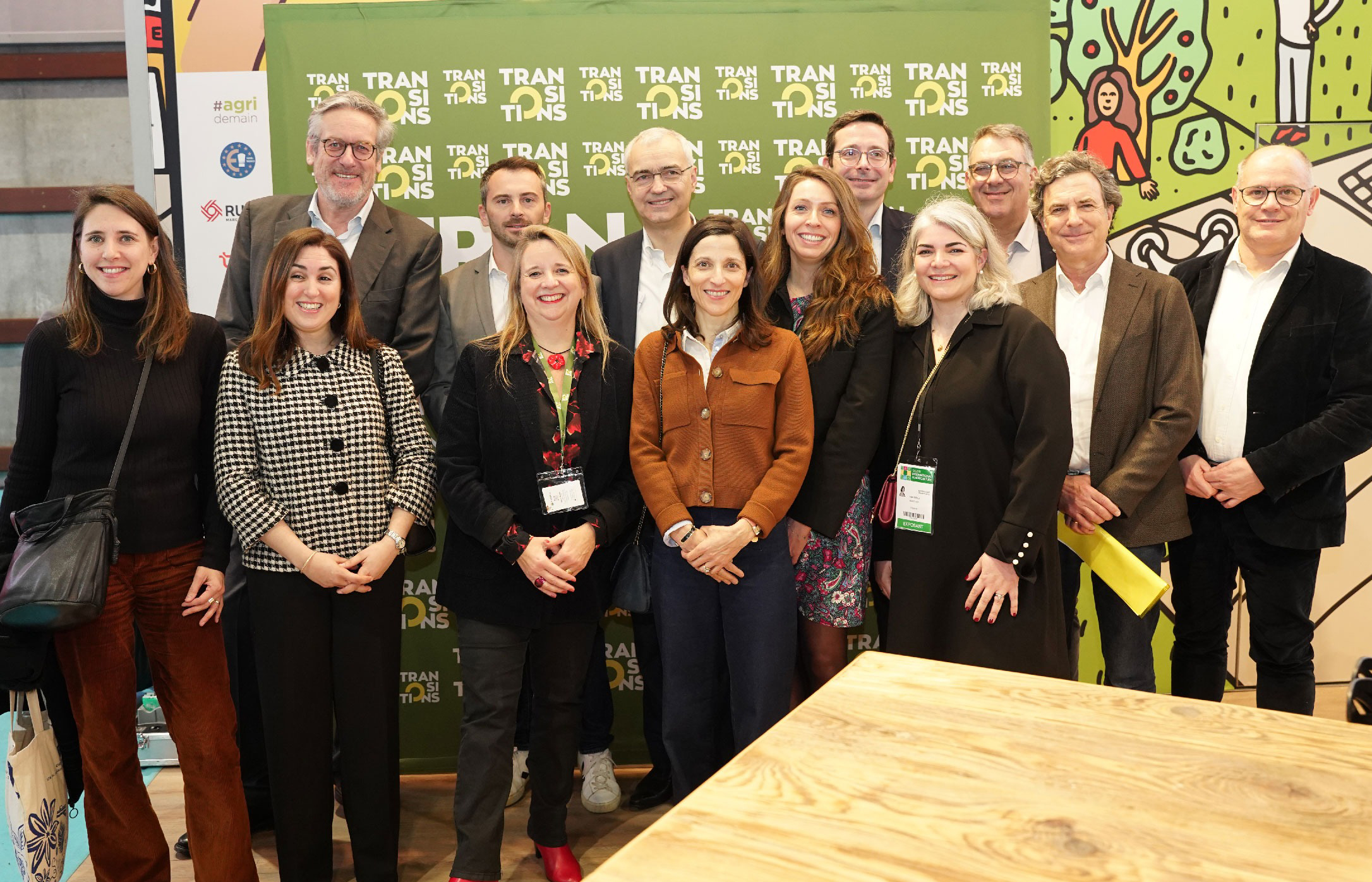
The entire TRANSITIONS ecosystem got together for their third annual seminar on 6 October 2026, in the presence of Catherine Geslain-Lanéelle, the Director of Strategy and Political Analysis at the European Commission’s Directorate General for Agriculture and Rural Development, with opening remarks by Julien Denormandie, former Minister for Agriculture and Housing, Chief Impact Officer at Sweep, Senior Adviser at RAISE, and Chairman of Keprea’s strategic committee. ©Bertrand Boissimon
The first cohort of VIVESCIA cooperative farmers, who joined in 2023, has just completed its three-year cycle with environmental results that exceed the targets set when the program was launched.
In September 2023, at Châlons agricultural trade fair, VIVESCIA cooperative group launched TRANSITIONS, a pioneering program at French at European level, to help farmers adopt regenerative, low-carbon agricultural practices that promote soil health and biodiversity. Three years on, at the program’s third annual seminar, TRANSITIONS unveiled the results of its first full cycle of support for farmers and reviewed the progress made in terms of both technical and financial support.
Results that exceeded expectations
Receiving technical and financial support to reduce the risks they face, since 2023 the 185 farmers in this first cohort have followed individual action plans, measured their practices and impact, and generated robust indicators that were audited by the independent organizations Bureau Veritas and Control Union.
A systemic agronomic framework designed at the level of the whole farm: To establish a common framework, four universal indicators are monitored — soil, carbon, biodiversity — the only way to provide a consistent measure of progress and environmental performance.
- Greenhouse gas emissions per hectare fell by 9.9% compared to 2023, equivalent to 10,000 tons of GHG avoided, or the emissions from 5,000 flights from Paris to New York and back.
- More than 11.8 days’ extra soil cover, compared to only three days in the first year: an improvement of nine days, promoting resilience and soil biodiversity, and water retention.
- 1,41 tons of humified carbon returned per hectare — with regular improvement since 2023 (1.3 in the first year).
- The vast majority of the farmers involved have environmental accreditations related to biodiversity (42% in CE2, 46% in CE2+).42% en CE2, 46 % en CE2+).
“These results make us proud, collectively. They are proof that our approach — a scientific framework, practical individual support, and a financial commitment shared between upstream and downstream partners — works over the long term. Three years after its launch, TRANSITIONS is now a reliable and duplicable model that promotes the resilience of French agriculture and its European
value chains,” said Valérie Frapier, Director of the TRANSITIONS program, adding: “We now manage more than a million data points to guarantee the robustness of our results, which are audited by reliable third-party organizations. That’s what makes TRANSITIONS a benchmark for European agribusiness and allows us to accumulate unique experience that benefits all our partners and any partners that decide to join us in the future.”
A well-established program that is scaling up
Beyond the success of the first cohort, the end of the first cycle confirms the momentum and influence of the whole TRANSITIONS program.
✓ 650 farmers have received support through the program since 2023: 585 VIVESCIA farmers, divided into three cohorts, who were joined by the first cohort of 60 TRANSITIONS by NORIAP farmers from the Hauts-de-France and Seine-Maritime departments.
A program that has already been duplicated and is turning toward new horizons: “We are not starting out from nothing: NORIAP has been helping farmers work on regenerative agriculture with comparable indicators for six years. This experience enabled us to create a solid first cohort: all of our farmers successfully achieved level I of the TRANSITIONS program. This is a very encouraging signal for what’s to come and for our capacity to bring on board and help more farms. With TRANSITIONS we are now scaling up, both in terms of the number of farms that receive support and the management of practices across the full crop rotation, with a shared agronomic framework. This is an essential driver for boosting farms’ resilience in an increasingly demanding climatic and geopolitical context,” said NORIAP’s Director for Agriculture, Nathalie Ternois.
✓ More than 600,000 tons of grain, cereal and beet on 100,000 hectares, representing 20% of crops harvested by VIVESCIA farmers.
✓ VIVESCIA farmers involved in the project will receive more than €14 million in financial support by June 2027, thanks to a united value chain. Nearly 85% of the program is financed by manufacturing partners, who share the financial commitment.
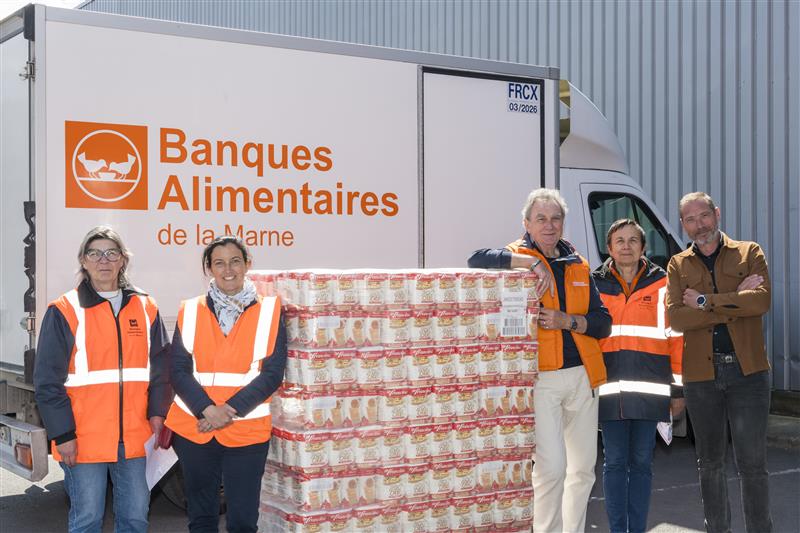
✓ More than 200 group training sessions have been organized since the launch, led by 15 agronomists and 65 trained VIVESCIA technicians, with the support of technical partners like Arvalis, Earthworm, CelestaLab, and entomologists for biodiversity. And each farmer has designed an individual action plan and updated it annually.
✓ 1 million data points collected, refined and managed over 20,000 plots.
✓ A wider coalition with the arrival of Panzani, Suntory, Vandemoortele, Pernod Ricard, Bimbo QSR, McDonald's France, E.Leclerc Energies and OCP Nutricrops in 2025 and 2026 — joining our long-standing partners Avril/Saipol, Roquette, Tereos, Malteurop, Grands Moulins de Paris & Francine, Etea Sedamyl, KALIZEA, and their customers, Heineken, Délifrance, Puratos, Griffith Foods, Emmi Desserts, and the brewers Caulier and Castelain.
These results arrive at a time when repeated droughts and heat waves remind us of the urgent need to build more resilient farms and supply chains. “The TRANSITIONS program is a strategic platform helping French farming and its European value chains to meet this challenge,” explained Valérie Frapier, Director of the TRANSITIONS program.