Logo TRANSITIONS


TRANSITIONS brings together plant and grain businesses across the entire value chain in an ambitious, innovative, and robust programme that is aligned with internationally recognised scientific standards (GHG Protocol, SBTi Flag, SAI Regen Ag) and audited by independent bodies.

TRANSITIONS is building on its momentum and consolidating its driving role as the leading impact-driven programme in Europe. Over the past two years, TRANSITIONS has grown and spread... This is the perfect opportunity to give a voice to the people behind it, who bring it to life...  


Read the TRANSITIONS booklet by clicking here:
 

600,000+

tons of grain and oilseeds

€14 million+

in financial support by June 2027

650 farmers

have received support through the program

200+

group training sessions

1 million

data points collected refined and managed over 20,000 plots

IN THE BEGINNING... 

The programme was born of VIVESCIA Cooperative’s long-standing ambition to help its cooperative members make their farms more sustainable. In 2021, VIVESCIA’s teams, with technical support from its partner Earthworm, designed a concrete, systemic response to the challenges of agricultural transitions by linking upstream agriculture with downstream food processing. In September 2023, the TRANSITIONS programme was launched: the first collective improvement programme of this scale across farms’ full crop rotation cycle. 

HOW DOES IT WORK?

A systemic agronomic framework that takes into account the soil, carbon, and biodiversity, TRANSITIONS was designed at the level of the farm — the only way to guarantee progress. The programme aims to mitigate financial and technical risk for farmers, who commit for three years, thanks to significant financial support, a collective training plan, and concrete individual support. 

Coalitions of agri-food and manufacturing customers with technical and scientific partners: only a collective solution will enable us to share the cost of a successful, large-scale transition of agricultural and food systems.

A digital chain of trust: The cornerstone of the programme is a robust data chain whose pioneering methodology is unanimously recognised in our sector.

RESULTS THAT EXCEEDED EXPECTATIONS 

Receiving technical and financial support to reduce the risks they face, since 2023 the 185 farmers of the first cohort have followed individual action plans, measured their practices and impact, and generated robust indicators that were audited by the independent organizations Bureau Veritas and Control Union. 

  • Greenhouse gas emissions per hectare fell by 9.9% compared to 2023, equivalent to 10,000 tons of GHG avoided, or the emissions from 5,000 flights from Paris to New York and back. 
  • More than 11.8 days’ extra soil cover, compared to only three days in the first year: an improvement of nine days, promoting resilience and soil biodiversity, and water retention. 
  • 1.41 tons of humified carbon returned per hectare — with regular improvement since 2023 (1.3 in the first year). 
  • The vast majority of the farmers involved have environmental accreditations related to biodiversity (42% in CE2, 46% in CE2+).

A word from Valérie Frapier
Group CSR Director and Director of the TRANSITIONS Programme

" TRANSITIONS is an optimistic vision of agriculture: a regenerative, forward-looking agricultural model that reconciles sustainability, innovation, and productivity. The success of TRANSITIONS’ first steps stems from the mutual trust and collective energy that drives its partners across our value chains and industries. We have had two years of learning, action, and progress towards making tomorrow’s farms more resilient and fostering low-carbon agricultural practices that promote soil health and biodiversity. Onward to 2030! "

Valérie Frapier

A word from Valérie Frapier
Group CSR Director and Director of the TRANSITIONS Programme

" TRANSITIONS is an optimistic vision of agriculture: a regenerative, forward-looking agricultural model that reconciles sustainability, innovation, and productivity. The success of TRANSITIONS’ first steps stems from the mutual trust and collective energy that drives its partners across our value chains and industries. We have had two years of learning, action, and progress towards making tomorrow’s farms more resilient and fostering low-carbon agricultural practices that promote soil health and biodiversity. Onward to 2030! "

A word from Christoph Büren
President of VIVESCIA Group

"Our cooperative philosophy and our ambition as a French grain group makes TRANSITIONS a powerful lever for meeting the challenges of agriculture and food starting with concrete solutions to de-risk farmers. Over the last year, TRANSITIONS has helped to change practices and mentalities. Working alongside farmers, by mobilising a coalition of committed companies, we built this innovative, open programme around a wide cooperative, scientific and industrial ecosystem.
We are getting ready for a new phase: replication. It’s a great source of satisfaction and a new challenge."

Christoph Büren

A word from Christoph Büren
President of VIVESCIA Group

"Our cooperative philosophy and our ambition as a French grain group makes TRANSITIONS a powerful lever for meeting the challenges of agriculture and food starting with concrete solutions to de-risk farmers. Over the last year, TRANSITIONS has helped to change practices and mentalities. Working alongside farmers, by mobilising a coalition of committed companies, we built this innovative, open programme around a wide cooperative, scientific and industrial ecosystem.
We are getting ready for a new phase: replication. It’s a great source of satisfaction and a new challenge."

Discover the Transitions project
in 3 minutes

Discover the Transitions project
in 3 minutes
Perspectives
Christoph Büren, President of VIVESCIA Group
An ambitious and innovative programme, TRANSITIONS is a bridge between farmers and food processing customers, enabling progress on all sides. It also serves as a laboratory for modelling proactive agriculture and more resilient value chains. TRANSITIONS is spreading and developing beyond the borders of VIVESCIA’s cooperative territory. Together, let’s continue writing the TRANSITIONS story!
David Saelens, President of Noriap
Joining the TRANSITIONS programme is a natural extension of the supply agreements we already have, with an even stronger ambition: to adapt our cropping systems to the expectations of manufacturers and consumers. It is a structural way to support the broader evolution of our practices, to strengthen the resilience of our farms in the face of climatic, economic, and regulatory uncertainty, and to give tangible compensation to farmers for their efforts.
Bruno Bonnell, Secretary General for Investment, in charge of the France 2030 plan
Agricultural cooperatives are very important intermediaries on the ground. We wholeheartedly support the TRANSITIONS programme. The idea is really to get upstream and downstream stakeholders working together to promote the virtuous transfer of value. The State will continue to support this coalition as it develops.
Hans Jöhr, Honorary President of SAI – TRANSITIONS Seminar 2025
This is the most significant programme in Europe; it is extremely well designed, and I believe that, through the SAI Platform, we can help facilitate its implementation in other countries.
Philippe Mauguin, President of INRAE – Paris International Agricultural Show 2025
VIVESCIA’s initiative addresses many issues that farmers cannot manage on their own. It combines the massive need for support to make the agro-ecological transition a success with a collective, local approach alongside individual actions.
Franck Leroy, President, Grand Est Regional Council
To design an engaging, collective programme that shares the cost and mitigates risk for all stakeholders is really setting an example. TRANSITIONS is a model that we must adapt to practically every aspect of our society in the Grand Est region.
Christophe Grison, President of Valfrance
We have just joined the TRANSITIONS program to help build an attractive and collaborative model of agriculture. We are committed to supporting our cooperative members as they adapt their production systems. By leveraging our value-added supply chains, we will promote and enhance this sustainable approach to farming—one that aims to mitigate and adapt to climate change while preserving biodiversity and protecting soil health. TRANSITIONS is fully aligned with Valfrance's vision for the future, as the company has recently become a mission-driven organization.

Food industry and industrial stakeholders

Isabelle Sucra, CSR Director, Heineken France
HEINEKEN strives to reconcile performance and sustainability by acting to reduce its environmental footprint and strengthen the resilience of its sourcing. Joining the TRANSITIONS programme, alongside Malteurop, aligns fully with this vision.
Maud Carrière, CSR Manager, Brasserie Castelain
Regenerative agriculture will help us offer consumers a responsible choice with barley grown using evidence-based agricultural practices. We chose TRANSITIONS first out of conviction — because the programme resonated with our DNA — but also out of loyalty and trust in Malteurop, our long-standing supplier. And finally, because of the availability of reliable data: consumers don’t want words any more, they want action, backed up by figures.
Jean-Philippe Michaux, CFO, Puratos
We want to be part of creating a future where regenerative agriculture becomes the norm — by stimulating innovation and offering delicious food to feed the planet. To achieve this, we must support as many committed farmers as possible. We have worked with Grands Moulins de Paris on flour procurement for many years, and this programme has enabled us to go even further in terms of innovation and development.
Morgane Yvergniaux, Director of Climate and Nature, Pernod Ricard
We are proud to join the TRANSITIONS programme alongside VIVESCIA and Sedamyl as part of our regenerative agriculture roadmap. We believe in the transformative power of regenerative agriculture and in the need for collective commitment to sustainably evolve our value chains.
Ugo Sidoli, Head of Sustainable Development, Etea Sedamyl
Thanks to the regenerative practices implemented as part of TRANSITIONS over the coming years, we are committing to significantly reducing our products’ carbon footprint and offering our customers low-impact ingredients.
David Sergent, Secretary General, Tereos
Tereos has an extremely ambitious decarbonisation plan. For scope 3, we aim to reduce our CO₂ emissions by 36% by 2032 and to source 20% of raw materials from regenerative agriculture among our cooperative members. The TRANSITIONS programme aligns perfectly with this ambition.
Johan Declerck, Raw Materials Manager, Vandemoortele
It is important to show our clients that we are genuinely engaged in a sustainability programme. In the retail sector, we are seeing rising demand for sustainable and low-carbon products, because consumers are increasingly sensitive to these issues.
Florian Plomion, Procurement Manager, Griffith Foods Europe
Our 2030 ambition is for 80% of our raw-material portfolio to come from sustainable sources — certified, for instance, under FSA–SAI, GLOBALG.A.P. or Rainforest Alliance — including 25% from regenerative agriculture. We have evaluated many programmes across Europe, and TRANSITIONS is clearly among the best. Its strengths are its maturity, its whole-farm coverage, the fact that it is not limited to a single crop, and the robustness of the data provided. We want the TRANSITIONS programme to grow, to provide greater volumes and a wider range of ingredients by integrating new crops. And an international roll-out is also of interest to us, as we operate in many countries.
Géraldine Bernard, Global agriculture sustainability lead, Heineken
Talking to agri-food companies and working closely with technology experts has proven to be the most effective for delivering high-impact projects.
Inès Zerilli, Purchasing Director, Sustainable Supply Chains and Key Accounts, Bimbo QSR France
Joining the TRANSITIONS program marks a new milestone for Bimbo QSR France. We are committed to accelerating the transition of our wheat supply chain alongside our milling and cooperative partners, as well as our customer, McDonald’s France, by combining economic performance, product quality, and environmental progress. This commitment also reflects our determination to provide tangible support to farmers participating in the CRC Label Rouge supply chain and to strengthen the resilience of our supply chain.
Guillaume de Beaurepaire, Director of Purchasing, Quality, Logistics and Environment, McDonald’s France
Through the TRANSITIONS program, McDonald’s France is strengthening its commitment to French agricultural supply chains. In partnership with its suppliers, including Bimbo QSR France, our objective is to accelerate the transition to more sustainable farming practices, provide long-term support to farmers, and reduce the carbon footprint of our sourcing.
Albert Mathieu, President, Panzani
By joining TRANSITIONS, Panzani reaffirms a strong conviction: the resilience of the French durum wheat sector is built over the long term, alongside farmers, rooted in local communities, and through a shared dialogue that brings together all coalition partners around common progress. Our commitment is built around two strategic priorities.
Bruno Ben Said, Global Category Manager, Raw Materials, Roquette
Joining the program was a natural step for us, as we have known VIVESCIA for many years and have been working together for a long time.

Data robustness

Every link in the chain is involved... as explained by users, farmers, customers, and our technical partners during the TRANSITIONS annual seminar held on 2 October 2025.
Alban Collard, VIVESCIA Cooperative Member and Board Member
Harvesting, processing, adding value — that’s what a cooperative does. Around 100 years ago, cooperatives were created to pool production and grain-storage capacities. Today, they also collect and create value from the data generated by their members.
Alexandre Viennot, Commercial Director, Kermap
Clients appreciate the objectivity of the data (the same methodology is applied to all plots analysed), the ability to scale (we are already monitoring 10,000 plots today), and the automation of data flows. Kermap measures cover crops on each plot using satellite imaging that is analysed continuously by its artificial-intelligence models.
Marie Saglio, Managing Director, Saipol
Customers expect transparency and traceability — they expect trust and reliable data, which underpin the credibility of the sustainability index they purchase from us. That is why certification is essential: it allows us to substantiate our sustainability criteria and structure the markets. Saipol (Avril Group) is France’s leading processor of rapeseed and sunflower.
Marc Hoppenot, CEO of Wiuz
For the 2024 season, we analysed 18,000 plots, and after multiple rounds of verification, we identified errors on 107 plots — meaning less than 0.5% of the total. Such a low error rate could have justified simply removing those data points, but as VIVESCIA rightly explained to us, this would potentially have affected around fifty farmers who might not have received the remuneration they deserved. So we had to redo all our calculations over the summer, breaking down every single data point from each of the affected plots. The main source of error came from a calculator that was not recognising new practices, particularly those related to the application of organic amendments.
Adrien Trompier, Head of agri-food, Quantis
Data maturity is progressing rapidly. We now have increasingly robust statistical references, and, above all, we are beginning to see the emergence of time series and trends. Scaling up also makes the data more representative. TRANSITIONS is one of the most advanced programmes that exists — both in its ambition and in the way it has been designed and aligned with international standards.
Audrey Bourolleau, Co-founder of Hectar
People often talk about food sovereignty and energy sovereignty, but we should also be thinking about data sovereignty. Europe is the world’s leading agricultural power, and we have everything to gain by working collectively and committing together to produce structured, high-quality data that serves the entire value chain.
Bastien Sachet, CEO, Earthworm Foundation
Beyond the companies within the VIVESCIA Group, major players in the agri-food industry have joined this regenerative agriculture program—an area that industrial companies had, until fairly recently, remained relatively distant from. It is no coincidence that, for most industrial partners, TRANSITIONS represents their largest regenerative agriculture project!
Kawtar Benkhraba, Executive Vice President – Green Solution Business Unit, OCP Nutricrops
The transition towards more regenerative, low-carbon agriculture relies on strong partnerships rooted in science, dialogue, and innovation. For OCP Nutricrops, this coalition represents an opportunity to strengthen exchanges and cooperation among the various stakeholders across the agricultural value chain. By combining our expertise and sharing best practices, we can contribute to transforming agricultural models in support of farmers, food security, and climate action.

In the field ... farmers' voices

These farmers were among the first to commit to the TRANSITIONS programme. They share their motivations and how they have changed their practices.
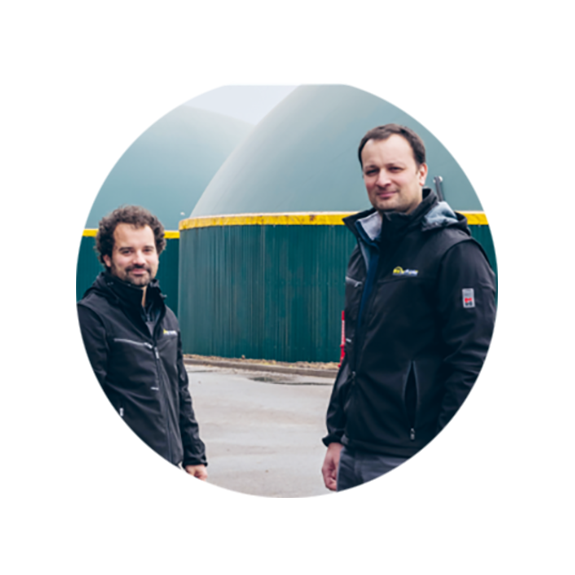
Martin Gosset, VIVESCIA Cooperative member in Aisne
We were already doing certain things on the farm out of conviction, but the programme pushed us further, gave us confidence, and confirmed that the improvements we had already made were going in the right direction.
Romain and Benjamin Scheuer, VIVESCIA cooperative farmers in the Ardennes
Farmers are being really compensated for their good practices for the first time! And the idea of becoming more virtuous without having to overhaul everything convinced us. We are finally showing consumers that French agriculture cares about the environment.
Benoît Minard, Noriap member-farmer, Seine-Maritime,
When I started out, my aim — like that of any farmer — was to secure the future of the business. And my capital, my tool, is the soil. If I don’t look after it, my job loses all meaning and has no future. We have rediscovered the value of biodiversity and crop diversity. For me, TRANSITIONS is recognition for the work my father did.
Clément Regnault, VIVESCIA Cooperative member in Marne
We are already affected by climate change, and it is important to commit to an environmental approach. But I felt that the existing solutions were just specifications to comply with and lacked a little substance. I was looking for something pragmatic, ambitious, with clear objectives and a way to achieve them... That is exactly what the TRANSITIONS programme provides, because it is grounded in agronomic research, precise and robust criteria, and regular support and monitoring.
Mathieu Peschaud, VIVESCIA Cooperative member in Haute-Marne
I had been part of the Agrosol Club (VIVESCIA) for years, but we were beginning to run into technical roadblocks, such as how to establish a cover crop when there is no rainfall between June and September. TRANSITIONS arrived at just the right time, with a robust agronomic framework and personalised support for implementing solutions.
Gauthier Charles, VIVESCIA Cooperative member in Seine-et-Marne
Taking part in the programme also allows us to share ideas with other farmers nearby whom we didn’t necessarily know. These discussions are extremely constructive. We visit each other’s farms, discover different approaches, different techniques... This way, we go further on our own farms and adapt our practices, with the support of TRANSITIONS experts.